❋
8/26/26Women Moving Culture
A network for the people who move art, ideas, audiences, and resources.
Women Moving Culture brings together women and gender-expansive people working across art, collecting, sales, marketing, technology, and cultural production.
Culture does not move on its own.
Art reaches the world through relationships. Artists make the work, but many people help it find an audience, a collector, a client, a partner, or a sustaining community.
Women Moving Culture connects the people doing that work. The network includes artists, gallerists, curators, dealers, advisors, collectors, producers, fundraisers, marketers, content creators, educators, and technologists. It also welcomes people building festivals, performances, digital platforms, pop-ups, memberships, and forms of cultural exchange that do not fit neatly within the traditional art market.
We want to understand how cultural value moves, who benefits from it, and what we can build together.
More than a mailing list
Women Moving Culture will begin with conversations, professional salons, talks, and social gatherings. These events will connect people who may work toward the same goals but rarely meet as colleagues.
A curator and a sales leader both interpret complex work for an audience. An artist and a content creator both know that attention does not always produce financial stability. A gallery director and a digital strategist both understand that trust develops over time.
Bringing this knowledge together can lead to stronger careers, better practices, and new ways to circulate resources.
Conversations that lead somewhere.
Women Moving Culture will host talks, professional salons, workshops, and social gatherings in partnership with cultural organizations.
What to expect
Our gatherings are designed for exchange rather than performance. A program may begin with a focused conversation, case study, or shared problem and continue through a reception where people can meet across professional roles.
Events may bring together artists, curators, collectors, marketers, technologists, advisors, producers, students, and institutional leaders. Some will be public. Others may be smaller working sessions organized around a particular question.
Possible subjects
How artists build collector relationships without losing control of their work
Pricing, negotiation, contracts, and commissions
Selling and supporting digital, performative, and temporary work
Audience development beyond social media platforms
Partnerships among artists, galleries, brands, institutions, and communities
Alternatives to unpaid labor and “exposure”
Mentorship and professional pathways for emerging practitioners
Community fundraising and collective responses to lost public funding
How women move money, attention, and opportunity through cultural fields
Host a gathering
We are looking for museums, galleries, schools, companies, foundations, and cultural organizations interested in co-hosting a Women Moving Culture gathering.
Women Moving Culture can develop the program, invite speakers, and bring participants from the network and Hunter College. Host partners may contribute space, invite members of their community, and help promote the gathering.
please email Amelia if you are interested in hosting a gathering or event for Women Moving Culture
Upcoming gatherings
Our first gatherings are now being developed for fall 2026. Join the network to receive invitations and announcements.
Beginning at Hunter College
Women Moving Culture is being developed by artist and Hunter College professor Amelia Winger-Bearskin alongside her fall 2026 course, Persuasive Design: Data, Marketing, and Movement Building.
The network will create a bridge among working professionals, students, educators, and emerging practitioners. Members may share case studies, propose projects, mentor students, offer internships, or contribute to conversations about the future of cultural work.
A professional network with students at its center.
Women Moving Culture begins at Hunter College, where the future of cultural work is already taking shape.
Why Hunter
Hunter students bring knowledge from many cultures, neighborhoods, industries, and lived experiences. Many balance college with employment, family responsibilities, and long commutes. They understand that creative work exists within the material conditions of daily life.
They deserve access to the relationships and practical knowledge that shape how culture is funded, marketed, commissioned, and sold.
Building a more equitable art economy requires more than inviting students into systems that were not designed for them. It requires bringing them into the work of creating new systems.
Persuasive Design
Women Moving Culture will develop alongside Persuasive Design: Data, Marketing, and Movement Building, a new undergraduate course taught by Amelia Winger-Bearskin at Hunter in fall 2026.
The course studies how ideas move through systems. Students will examine how design, data, storytelling, marketing, and social media affect the circulation of a message. They will learn to analyze audiences, develop strategies, interpret marketing data, and create public-facing projects.
Students will also examine surveillance, algorithmic bias, dark patterns, data extraction, and the point at which persuasion becomes coercion. The goal is to prepare them to use contemporary tools while questioning the systems those tools serve.
How professionals can participate
Members of Women Moving Culture may:
Speak with students about their work
Share a case study or professional challenge
Propose a project brief
Mentor a student or emerging professional
Offer an internship, paid project, or employment opportunity
Host a site visit or gathering
Help students understand a part of the cultural economy that is rarely taught
Students can contribute research, creative experiments, and new questions about platforms, audiences, and cultural value.
Who moves culture?
Women Moving Culture is a professional network for people who make art possible, visible, and sustainable.
Why the network exists
Women have long played central roles in producing, interpreting, promoting, selling, collecting, and sustaining art. They have not received an equal share of the money, ownership, authority, or recognition created through that labor.
This imbalance affects more than representation. It helps determine who can pay rent, maintain a studio, hire collaborators, preserve an archive, and continue working.
Women Moving Culture begins with a practical question: What becomes possible when more of the people who move culture can also move resources?
The network will create room to exchange knowledge about money, markets, audiences, labor, and professional power. It will connect people across roles that are often kept separate, from artists and curators to fundraisers, marketers, collectors, producers, and technologists.
Value and survival
Money is not the only measure of value. Access to money does, however, help determine who gets to keep creating.
Artists and cultural workers cannot live on visibility, prestige, or proximity to wealth. A sustainable cultural life depends on contracts, compensation, housing, healthcare, time, and the ability to plan for a future.
Women Moving Culture treats sales, marketing, and financial knowledge as subjects that artists and cultural workers have a right to understand. Knowing how markets work does not require accepting their worst practices. It gives us more power to question them, negotiate within them, and create better models.
Beyond the art object
The traditional art market was built around objects that could be authenticated, transported, displayed, stored, and resold. Artists have always made work that exceeds those categories.
Performance, digital art, games, social practice, online communities, public events, and temporary installations need other forms of support. Artists and cultural producers are already experimenting with commissions, licenses, editions, memberships, tickets, merchandise, patronage, partnerships, and direct sales.
Women Moving Culture is a place to compare these approaches, learn from their failures, and develop new ones.
Who the network is for
The network is open to cis and trans women, transmasculine and transfeminine people, nonbinary people, and people of other gender-expansive identities.
The name centers women because women remain underrepresented in the art market. The community also recognizes that gender-based exclusion affects people across a wider range of identities and experiences.
No one will be asked to explain or prove their gender in order to participate. If this community speaks to you, you belong.
What we believe
Cultural work is work and should be paid.
Artists and cultural workers deserve access to financial and professional knowledge.
Attention is useful, but it is not the same as support.
Relationships are part of cultural infrastructure.
Markets can be studied, questioned, and redesigned.
Students should help shape the systems they will inherit.
More people should have the power to decide what is commissioned, collected, preserved, and funded.
Founder
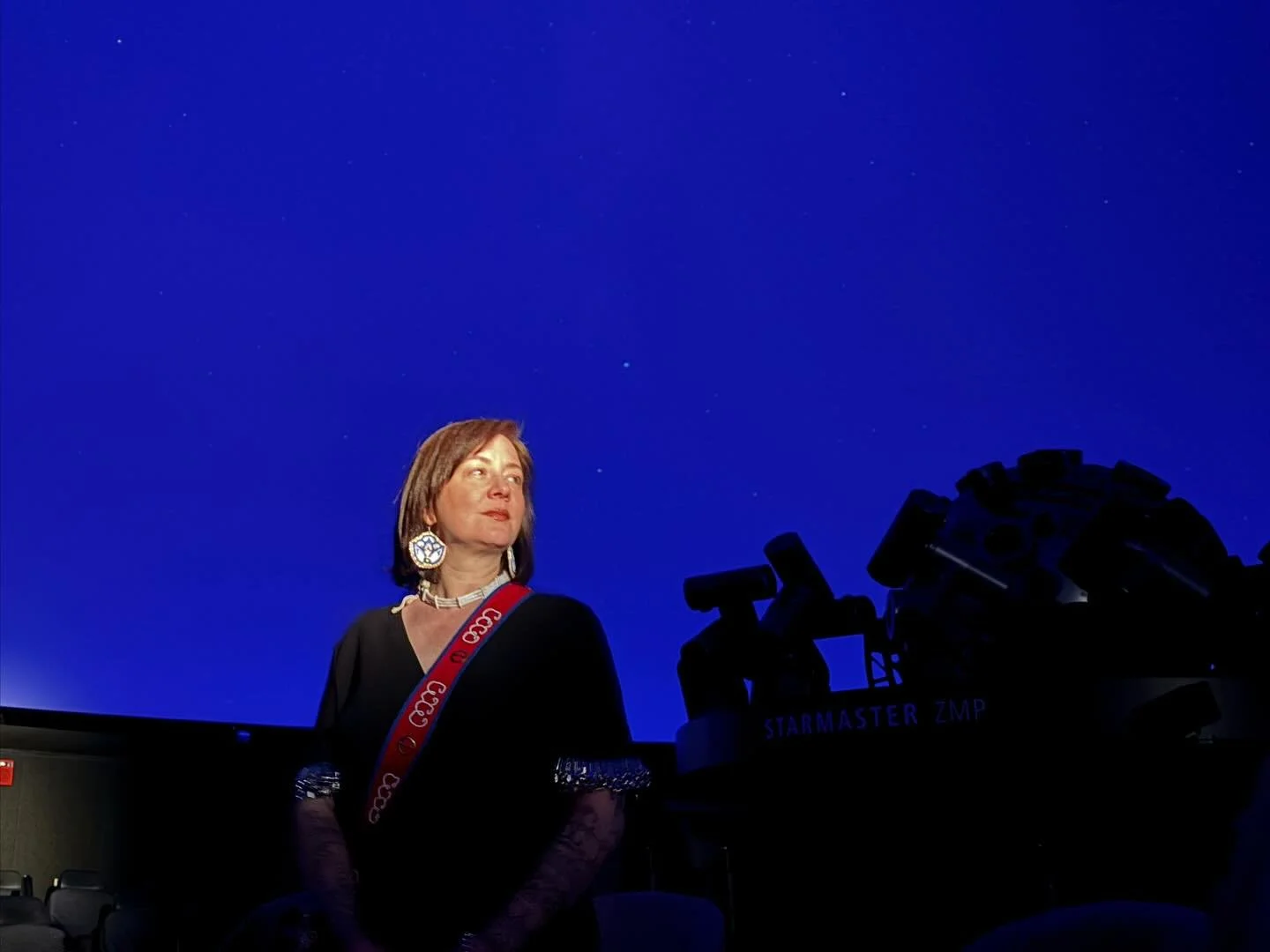
Amelia Winger-Bearskin
Amelia Winger-Bearskin is an artist and Professor of Film and Media Studies at Hunter College. Her work explores how technology, story, and systems shape public life. Her art is held in the permanent collections of the Whitney Museum of American Art, the Guggenheim Museum, and the McCord Stewart Museum.
She founded Women Moving Culture to connect people working across art, markets, technology, and public communication, and to create stronger professional pathways for Hunter students entering cultural fields.